Mazagon Dock: The Warship Factory
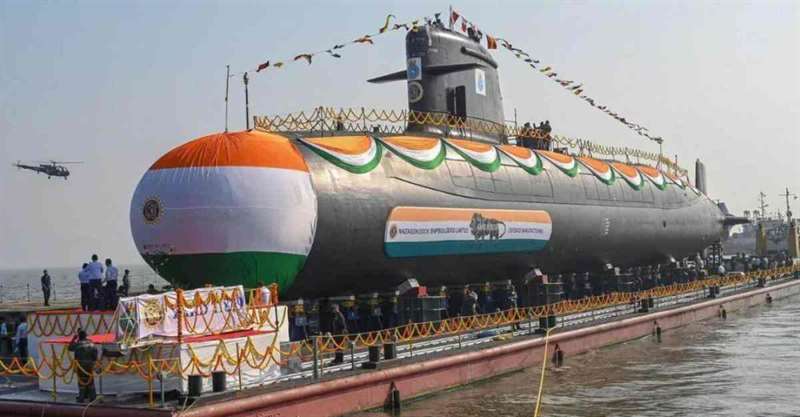
In January 2025, while much of corporate India was wading through year-end closes and boardroom reforecasts, something rarer was unfolding at a quiet corner of Mumbai’s harbour.
Three frontline warships - a frigate, a destroyer, and a submarines were commissioned on the same morning, in a single coordinated ceremony. No delays. No excuses. Just steel, precision, and audacity.
Mazagon Dock Shipbuilders Ltd. (MDL) , a public sector company that, unlike most, doesn’t rely on quarterly showmanship to prove its mettle. Its proof lies in water: ships delivered ahead of schedule, platforms built to plan, and a balance sheet that would make even tech founders envious.
But this is not a story about dividends or margins alone. This is about a company that executes like a global major, speaks like a civil servant, and compounds like a stealth operator. Let’s dive in.
1 | A Launch Pad Built on Under-Promising
Walk the wet dock at sunrise: a 7,400-tonne destroyer slips into the Arabian Sea five months ahead of schedule. The scene captures MDL’s signature move to set a modest target, then blast past it.
| FY-25 Guidance | FY-25 Outcome |
|---|---|
| Revenue “₹10–10.5 k cr would be excellent” | ₹11,432 cr (+20.8 % YoY) |
| “Prudent” PBT margin \~15 % | 27.2 % |
| Deliver “one major warship, one frigate, one submarine” | Two destroyers early, frigate on time, submarine commissioned |
Conservative forecasts buffer reputational risk, but the real secret is late-cycle efficiency: as a contract nears completion, MDL’s engineers shave costs, freeing margin that wasn’t in the original bid.
2 | Steel Nerves, Zero Debt
MDL hasn’t owed a rupee to bankers in twenty-plus years. Instead, it funds itself on milestone payments and advances from the Indian Navy.
- Cash & equivalents: ₹ 11-12 k cr
- Net worth: up 109 % in three years to ₹ 7,181 cr
- ROCE: mid-30 % range
- Capex: ₹ 5,000 cr over 4-5 yrs (larger dry docks, Nhava Sheva yard, floating dock), financed entirely in-house
- Dividend: highest-ever interim DPS of ₹ 23.19 for FY-25, yet growth still gets first call on cash
The fortress balance sheet lets MDL invest for the next decade without tapping debt markets or diluting shareholders.
3 | The Assembly-Line That Builds Icons
Shipbuilding is famously lumpy, but MDL’s yard runs almost like an automotive line:
- Parallel production bays handle up to 11 submarines and 10 warships simultaneously.
- A deliberate “in-house core, outsourced repeatables” model keeps fixed payroll lean while scaling peak demand through contractors.
- Early procurement locks steel and electronics prices when bids are won, muting later inflation.
Result: MDL has delivered six Kalvari-class submarines (2017-2025), beat schedule on its last two Project-15B destroyers, and staged a never-seen-before tri-commissioning of a submarine, frigate and destroyer on 15 Jan 2025.
4 | Beyond the Navy: Building Optionality
Dependence on a single customer is a structural risk for any defence PSU, so MDL is widening its wake:
| Initiative | Ticket Size | Strategic Value |
|---|---|---|
| ONGC offshore support vessels | \~₹ 6,500 cr | Diversifies into energy services |
| European multipurpose ship | ₹ 715 cr | First significant export; foreign validation |
| 2,500 shipping containers (CONCOR) | Small | Learning curve in modular fabrication |
| Hydrogen fuel-cell vessel with Tata | R\&D | Hedge against fossil-fuel bans |
| Submarine mid-life refits | 1/3 of build cost each | Recurring annuity stream kicks off 2025 |
Add Navratna status (approved in 2024) and the board can now green-light JVs up to ₹ 1,000 cr without a Delhi paper chase, crucial for commercial forays that move faster than defence tenders.
5 | Management: Engineers First, Storytellers Second
Leadership’s instinct is to talk like engineersp, recise about hull blocks and welding hours, guarded on spreadsheet minutiae:
- They refuse to pin margins beyond a broad band (“industry average \~15 %”), reminding analysts that cost-to-completion estimates shift each quarter.
- When asked about long-run revenue cadence, they note the yard’s lumpy geometry: a destroyer can swing quarterly topline by 10 %.
- The upside: credibility, each cautious statement has been backed by outperformance. The flip side: investors do extra homework connecting dots.
6 | A Risk Map That’s Mostly Green
| Risk | Why it Matters | Mitigation Status |
|---|---|---|
| Fixed-price inflation | ₹ 532 cr hit booked for Coast Guard & Denmark ships | Early bulk-buy policy tightened; provision largely one-off |
| Payment lags | –₹ 180 cr op-cash in H1 FY-25 | Navy clearances historically normalize by year-end |
| Geopolitics | Israel conflict slowed 17A frigate parts | Multi-source inventory & domestic substitution |
| Customer concentration | Navy still \~75 % of backlog | ONGC + exports + refits now rising share |
On balance, MDL’s zero leverage and huge liquidity give it room to absorb shocks that might cripple peers.
7 | Why the Market Still Undervalues the Yard
Investors and the media love linear narratives. MDL’s business is anything but linear:
Quarterly air pockets will keep flashing red on screens, even while the multi-year trend ascends. Those willing to zoom out see:
- Visibility: \~₹ 35 k cr executable backlog through FY-29, likely >₹ 1 lakh cr when P-75I subs and next-gen destroyers sign.
- Return on incremental capital north of 25 %.
- Strategic irreplaceability: no other Indian yard can build submarines today.
This analysis was produced with CompoundingAI's Deep Dive Reports, our vertical-intelligence engine that structures concall transcripts, filings, and presentations into decision-grade outputs within minutes. From auto-built delta tables to forensic screening and earnings-season dashboards, CompoundingAI keeps analysts a step ahead, no more PDF spelunking, just instant clarity.
Powered by CompoundingAI — AI research platform for Indian stocks, every claim cited from primary filings
Login Now