The Future of Power Lies Beneath: How India's Undersea Transmission Ambition is Creating New Winners
India is on the cusp of a transformative shift in its energy and infrastructure narrative. From a country focused primarily on domestic power access, we are now witnessing its strategic pivot toward becoming a global exporter of renewable electricity.
At the center of this revolution is a network that isn’t laid across land, but deep under the sea.
One Sun, One World, One Grid: The Grand Vision
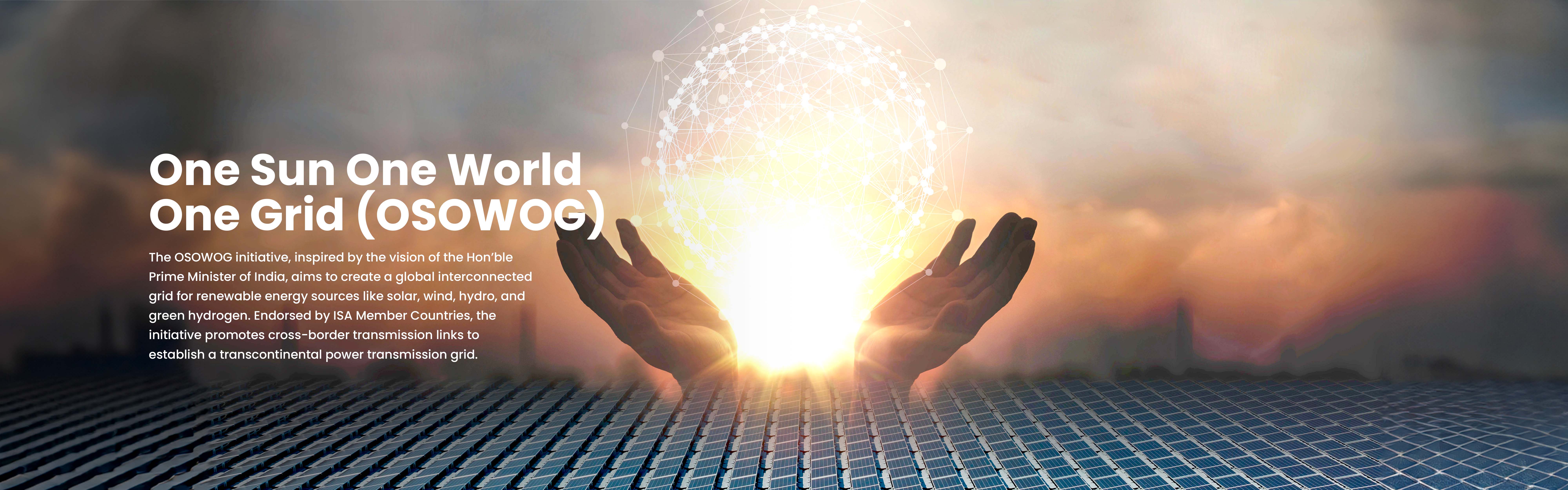
The Government of India, in partnership with the International Solar Alliance, is actively pursuing the One Sun, One World, One Grid (OSOWOG) initiative , a bold vision to interconnect power systems across continents.
The idea is elegantly simple: generate clean energy where the sun shines brightest and transmit it globally via high-capacity power grids, many of which will pass through oceans.
India has already committed to building:
- A ₹90,000 crore undersea transmission link to the UAE and Saudi Arabia
- A 2,000 MW HVDC link to Singapore via Andaman
- A 250 MW Paradeep-Andaman grid link
- Feasibility studies for connections to Sri Lanka, Myanmar, and Oman
These projects are not isolated dreams. They are being actively studied, budgeted, and phased into execution, starting FY26. Power Grid Corporation of India Ltd (PGCIL), the nodal agency, has disclosed over ₹30,000 crore in combined capex for the Andaman and Singapore links alone, with more in the pipeline.
The Deep Tech of Deep Sea Power Grids
These projects aren't your typical tower-and-conductor networks. Undersea transmission infrastructure requires:
- HVDC (High Voltage Direct Current) technology for minimal losses over long distances
- Voltage Source Converter (VSC) stations for power integration
- Subsea cable laying, trenching, and burial using Dynamic Positioning vessels
- Diving, welding, and marine inspection crews to handle repairs and cable joints
This has opened up a new niche in the power transmission ecosystem. While traditional EPC players like L\&T, Sterlite Power,Kalpatru,PowerGrid etc. will lead onshore execution, the ocean floor belongs to a new class of infrastructure enablers.
A New Class of Enablers
A growing group of marine infrastructure and offshore engineering firms, traditionally seen as support contractors to the oil & gas sector, are now stepping into a central role in this new energy paradigm. These companies possess capabilities in subsea installation, vessel operations, dynamic positioning, and diving services, the very same skills needed for deep-water HVDC cable projects.
They are already executing large-scale underwater infrastructure works such as riser clamp installations, deep-sea welding, cable burial support, and trenching for offshore oil & gas clients. With the right partnerships and scale-up, these firms are primed to serve as core marine EPC partners in undersea power transmission projects.
Who Else Is in Play?
According to CompoundingAI's analysis of company filings and earnings calls:
- Power Grid Corp has led early-stage feasibility and budgeting for Paradeep-Andaman and Singapore grids
- Larsen & Toubro is already executing large-scale 765kV and 400kV RE Zone projects, and is a likely prime contractor for HVDC cables
- Seamec Ltd is executing subsea infrastructure work for ONGC and possesses the deepwater capabilities (DP-class vessels, ROVs, diving services) needed for undersea power transmission support
- Deep Industries Ltd has flagged intent to serve undersea cable opportunities through its offshore fleet and recent Dolphin Shipping acquisition
- Bharti Airtel, Tata Communications, and others have capabilities in submarine cable laying (though for data, not power), indicating cross-domain synergies
- Vishnusurya Projects has entered marine infra via concrete floating systems
A New Infra Supercycle
With over ₹1.5 lakh crore and more in potential undersea grid projects expected over the next 10–15 years, India is entering a new infrastructure supercycle. Unlike past cycles focused on roads, ports, or railways, this one will be:
- Cross-border
- Electrified
- Digitally monitored
- Deep-tech enabled
India’s aspiration to become a clean energy exporter will not just reshape energy markets, but also redefine who the critical infrastructure players are.
Final Thought: The Winners May Be Underwater
The next wave of power infrastructure isn’t just about solar parks and land corridors. It’s about building invisible bridges of clean energy beneath oceans.
For India, this is a chance to lead the global energy transition not just with sunlit ambition, but with ocean-deep execution.
This analysis was produced with CompoundingAI, our vertical-intelligence engine that structures concall transcripts, filings, and presentations into decision-grade outputs within minutes. From auto-built delta tables to forensic screening and earnings-season dashboards, CompoundingAI keeps analysts a step ahead, no more PDF spelunking, just instant clarity.
Powered by CompoundingAI — AI research platform for Indian stocks, every claim cited from primary filings
Login Now