Thinking Outside the Barrel: How Oil Prices Keep Colliding with the EV Transition
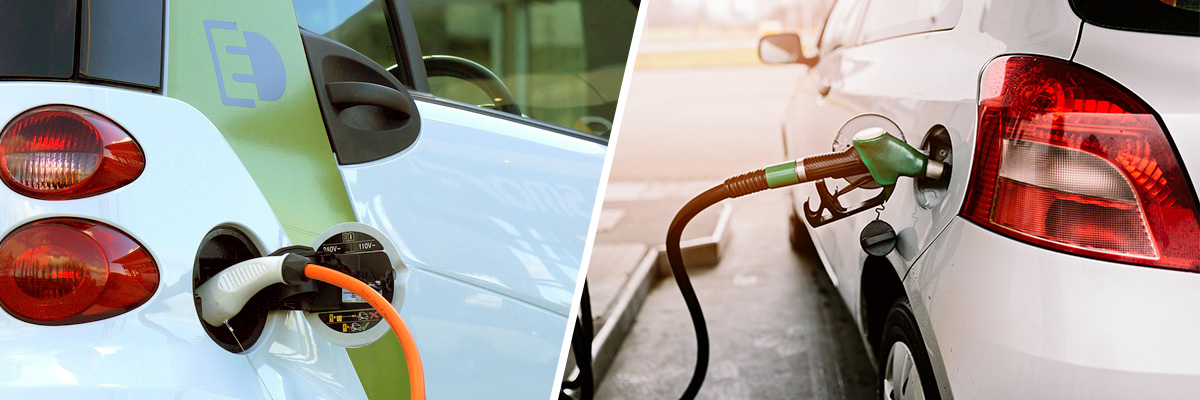
A forensic look at three moving parts:
(1) India’s dominant low-cost carrier posting record profits
(2) the latest global-EV surge
(3) the eerie habit of crude-oil prices collapsing just when electrification seems to catch fire
1 | A Tale of Two Milestones: Aviation Windfall Meets EV Surge
A recent market roundup highlighted two seemingly unrelated milestones:
- Aviation – India’s largest airline, Indigo, crushed its first-ever US $10 billion annual revenue, with Q4 FY25 profit up 62 % to ₹3,068 cr and EBITDA margin jumping to 27.5 %. Lower jet-fuel cost (₹1.60 vs ₹1.76 per seat-km) and a fleet leap to 434 aircraft did much of the heavy lifting.
- Electric mobility – Global electric-car sales smashed past 17 million in 2024 (over 20 % share) and are on track for >20 million in 2025. Roughly half of all cars sold in China last year were electric.
At first blush the two stories sit in separate sectors, yet they orbit the same gravity well: oil.
2 | Is crude a “kill switch” for EV enthusiasm?
| Cycle | Crude peak → trough | EV or hybrid momentum | What happened next |
|---|---|---|---|
| 2007-08 | $147 → \<$40 | Prius/early EV hype | Financial crisis + cheap petrol stalled demand |
| 2022-23 | $139 → mid-$60s | 17 M EVs sold in 2024 | Paradox: EVs still grew, but payback math in price-sensitive markets weakened |
How does crude fall 50–75 % in months? Three overlapping levers:
- OPEC+ spare-capacity dumps & quota tweaks (voluntary cuts now being unwound, possibly by Sep 2025)
- Strategic Petroleum Reserve draw-downs (180 Mbbl release in 2022).
- Futures-market sentiment swings - macro funds flip from “energy super-cycle” to net short when central banks tighten.
Co-ordination isn’t required: the interests of petro-states, refiners and oil-services firms are naturally aligned in slowing the green transition.
3 | Why the 2024-25 EV boom survived cheap oil
3.1 Technology tail-wind
- Global battery-pack prices fell 20 % in 2024 to US $115/kWh, the steepest drop since 2017.
- Nearly two-thirds of EVs sold in China were already cheaper than ICE models before subsidies.
3.2 Policy lock-ins
EU fleet-CO₂ targets, US ZEV mandates, India’s FAME-II → PM E-DRIVE, and heavy Chinese industrial policy force OEMs to keep shovelling capital into EV lines even if crude trades at $60.
3.3 Demand-mix shift
Corporate fleets buy on lifetime TCO, not sticker price. Even with crude in the mid-60s, electricity beats diesel by \~30 % per km for high-utilisation logistics vans and city buses.
4 | India’s knife-edge: cheap petrol vs strategic autonomy
| Indicator | 2024-25 datapoint | Oil-price sensitivity |
|---|---|---|
| Passenger-car EV share | \~100 k units in 2024 (≈2 %), but +45 % YoY in Q1 2025 to 35 k units. | Crude \<$70 lengthens breakeven for mass-market BEVs, yet duty walls + localisation PLIs cushion OEM incentives. |
| 2-/3-wheelers | 1.3 M e-2Ws sold (≈6 % share) & 57 % of 3-wheelers electric in 2024. | Petrol at ₹90/litre keeps sub-₹1-per-km advantage; at ₹60 oil it stretches but remains positive for delivery fleets. |
| Heavy EVs | Global e-truck sales up \~80 % in 2024; >80 % in China. India rolling out PM E-DRIVE truck incentives. | Diesel softness could delay private fleet adoption until battery TCO parity (\~2030). |
| Charging infra | 25 k public chargers by Dec 2024; ratio 135 EVs per charger. | Lower fuel tax take may cap capex grants unless carbon pricing fills the gap. |
| Battery supply chain | First domestic plants (>5 GWh) turned on in 2024; China’s capacity >500× India’s. | If cheap oil slows BEV demand, local gigafactories risk under-utilisation unless exports materialise. |
5 | Aviation as the control experiment
The same oil swing that complicates India’s EV roadmap juiced profits for Indigo :
- Jet-fuel cost per seat-km down \~9 % YoY in FY25; every ₹0.01 matters when fuel is 40 % of CASK.
- A single pilgrimage event (Mahakumbh) + cheaper fuel added five full points to EBITDA margin.
Airlines prove that fossil price cyclicality is still a live grenade under high-capex business models - EV makers are racing to de-fossilise that dependency.
6 | Scenarios through 2030
| Scenario | Brent 2025-27 | EV share 2030 | Commentary |
|---|---|---|---|
| Managed decline | $60-85 | Global ≈ 30 %; India ≈ 12 % | Battery price curve dominates; oil no longer decisive outside aviation & petrochem. |
| Supply shock | >$120 | Turbo-charges BEV TCO; India hits 15 % early | Fiscal pain but policy window for fuel-tax floor + EV GST cuts. |
| Demand crash | \<$50 | EV share plateaus; price-sensitive segments delay | Stimulus likely flows to charging + buses; weaker OEMs consolidate. |
| Carbon-pricing ratchet | Oil \<$70 but taxed | EV cost parity sticks even if crude cheap | Moves price lever from Vienna to Parliaments. |
7 | Take-aways
- Oil still matters but batteries now talk back. In 2008 cheap crude decapitated hybrids; in 2024 battery deflation blunted that weapon.
- Airlines are the canary. Watch their fuel-hedging and ticket prices: if margins sag on a Brent rebound, road-transport electrification will accelerate politically.
- Battery is the new barrel. Whoever locks in sub-$70/kWh packs controls the next price lever. China gets this; India’s gigafactory build-out will decide whether it buys or sells battery “barrels.”
- Policy inertia is sticky. Once a country crosses \~20 % EV share, rolling back becomes electorally toxic. The sprint for India is 15 % by 2030 after that, oil loses its veto power.
Until then, every time EVs threaten tipping-point scale, expect the barrel to fight back. The question is no longer if that resistance comes but whether technology, policy and capital now have enough momentum to roll straight over it.
Sources: Guardian, PIIE, Reuters, FT, Business Standard, IEA Global EV Outlook 2025, BloombergNEF battery-price survey, ICCT, national Vahan & Ministry data, and publicly available airline filings.
Powered by CompoundingAI — AI research platform for Indian stocks, every claim cited from primary filings
Login Now